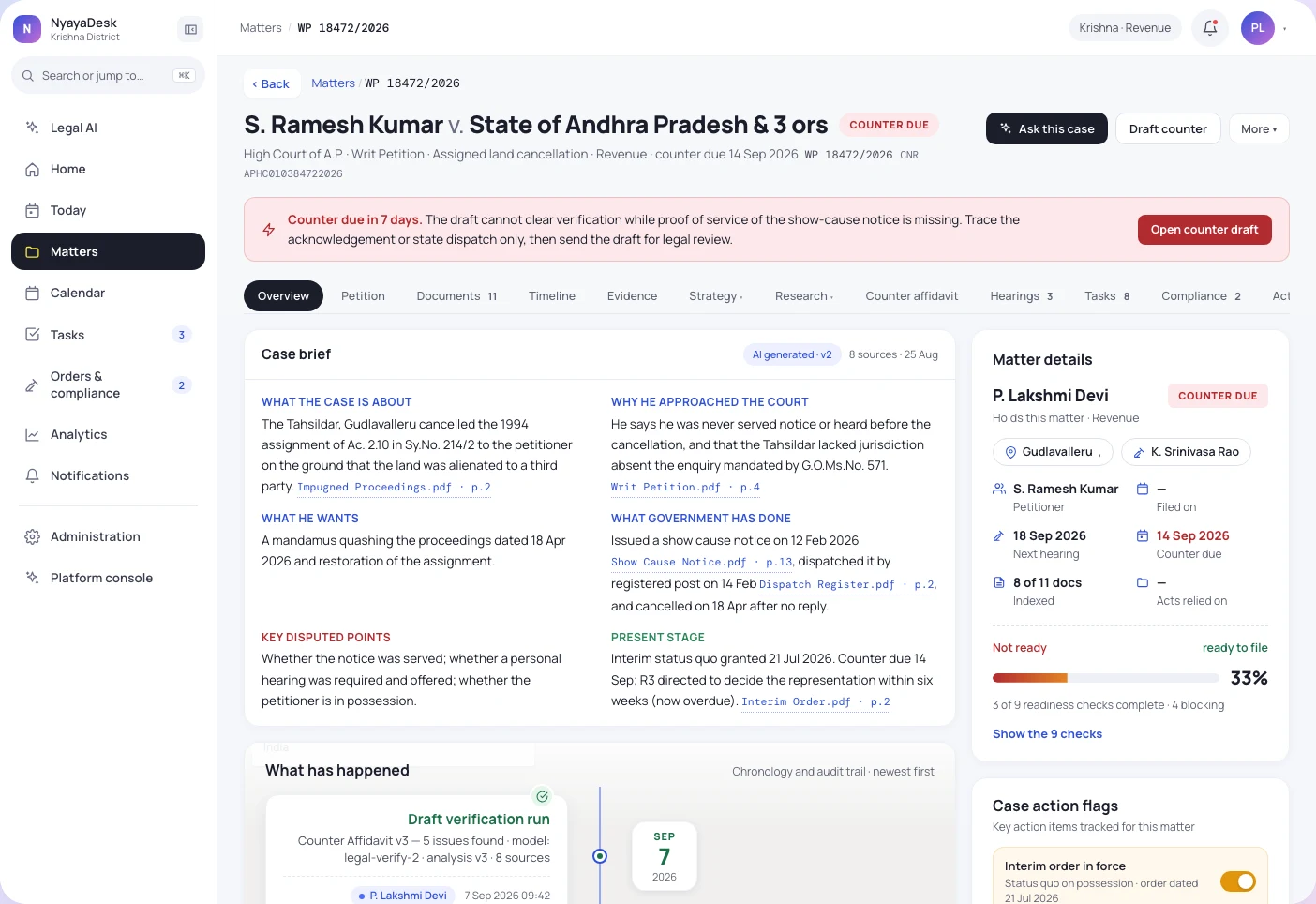
Built for every desk in the litigation chain
Meet NyayaDesk
One record, from the first notice to the last compliance report.
Read the record
Scanned registers, notices and survey records are read page by page. Dates, survey numbers and references land in structured fields, each tied to its page, with a confidence score you can see.
Case intelligence →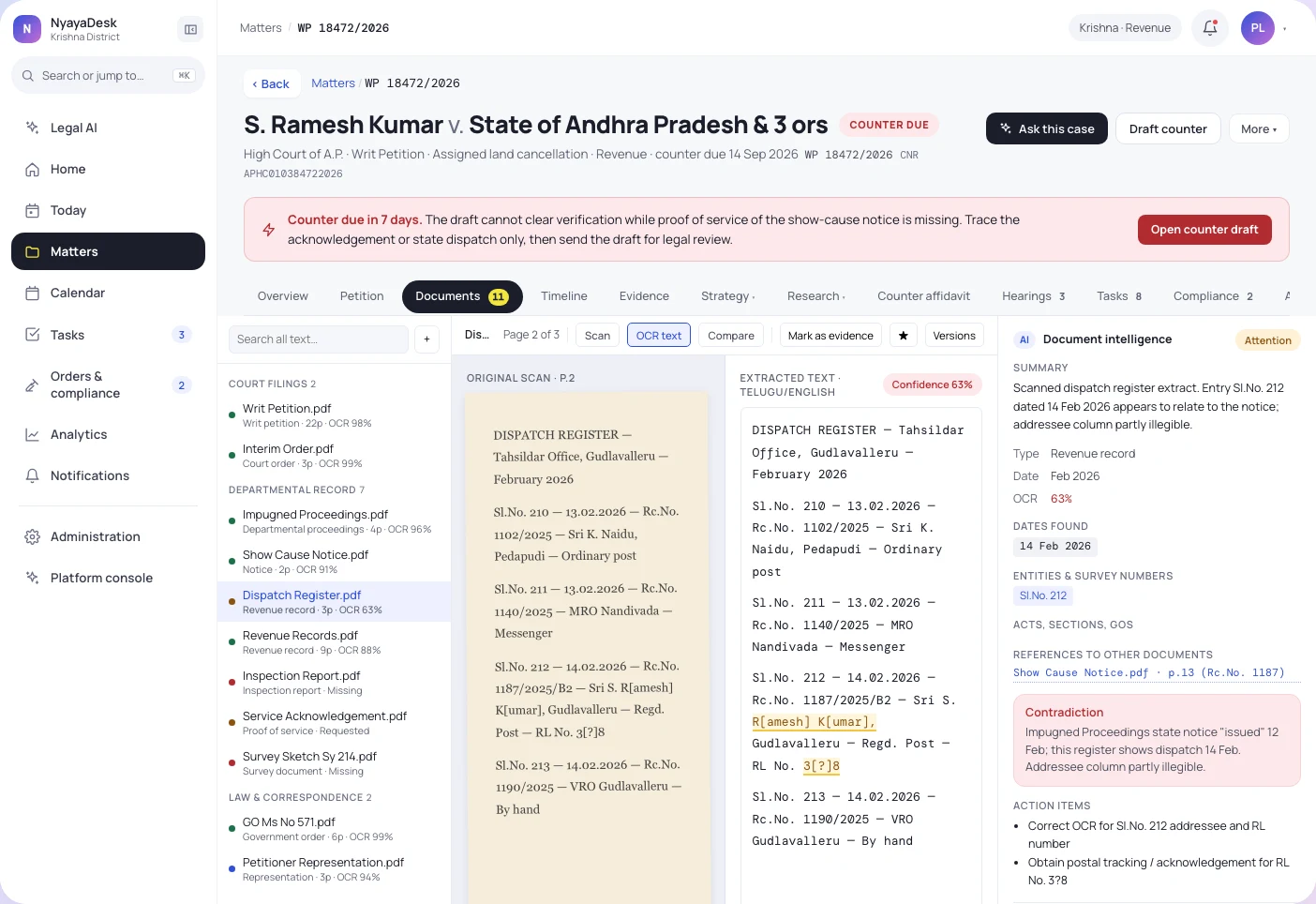
See what actually happened
A chronology built from every document on the matter. Where two papers disagree on a date, or a step is missing, it says so before the petitioner’s counsel does.
Chronology and gaps →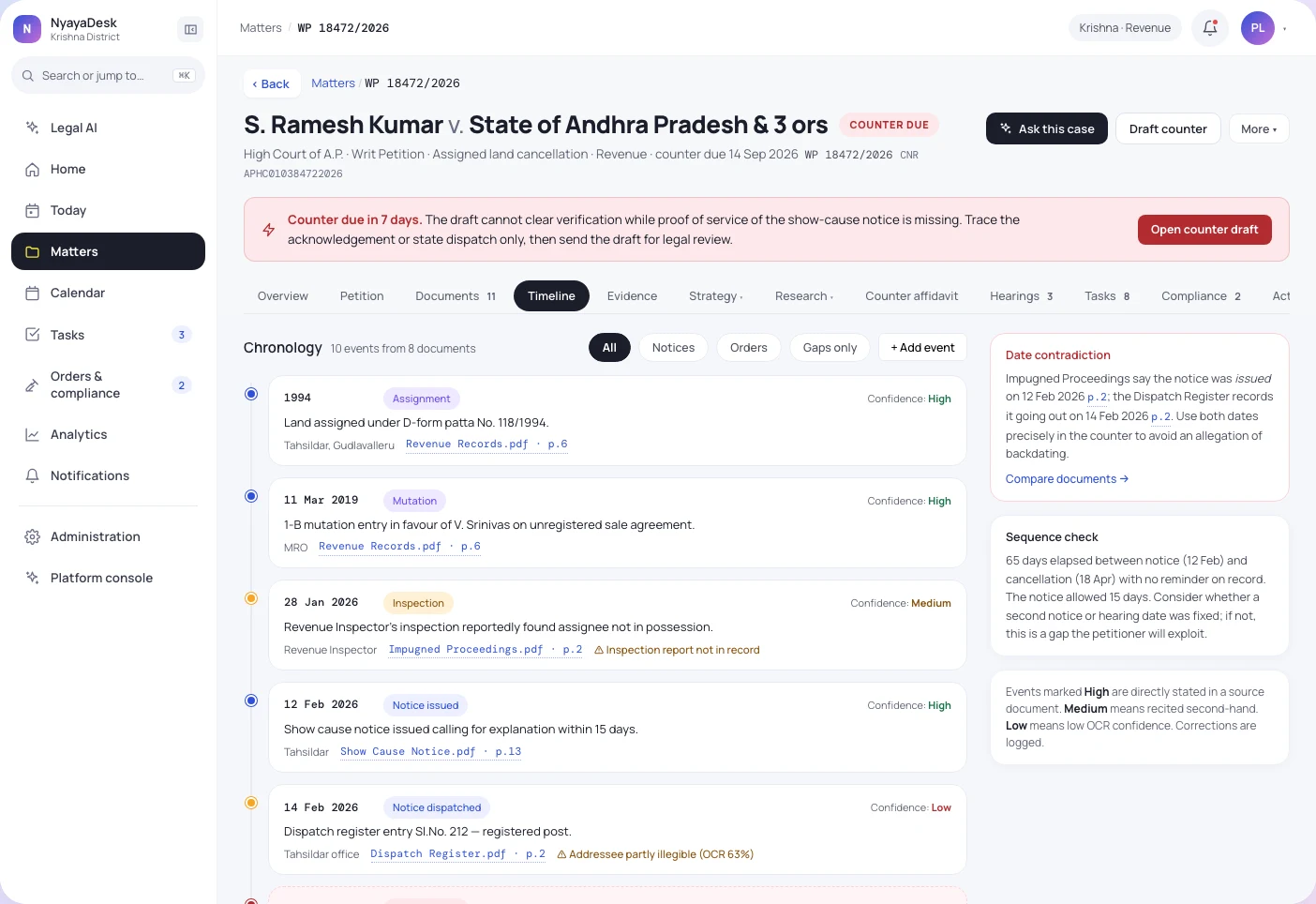
Check every sworn sentence
The counter affidavit is drafted from confirmed facts. Then a second, independent model checks each sentence against the source. Unsupported claims stay open until a person resolves them.
Drafting and verification →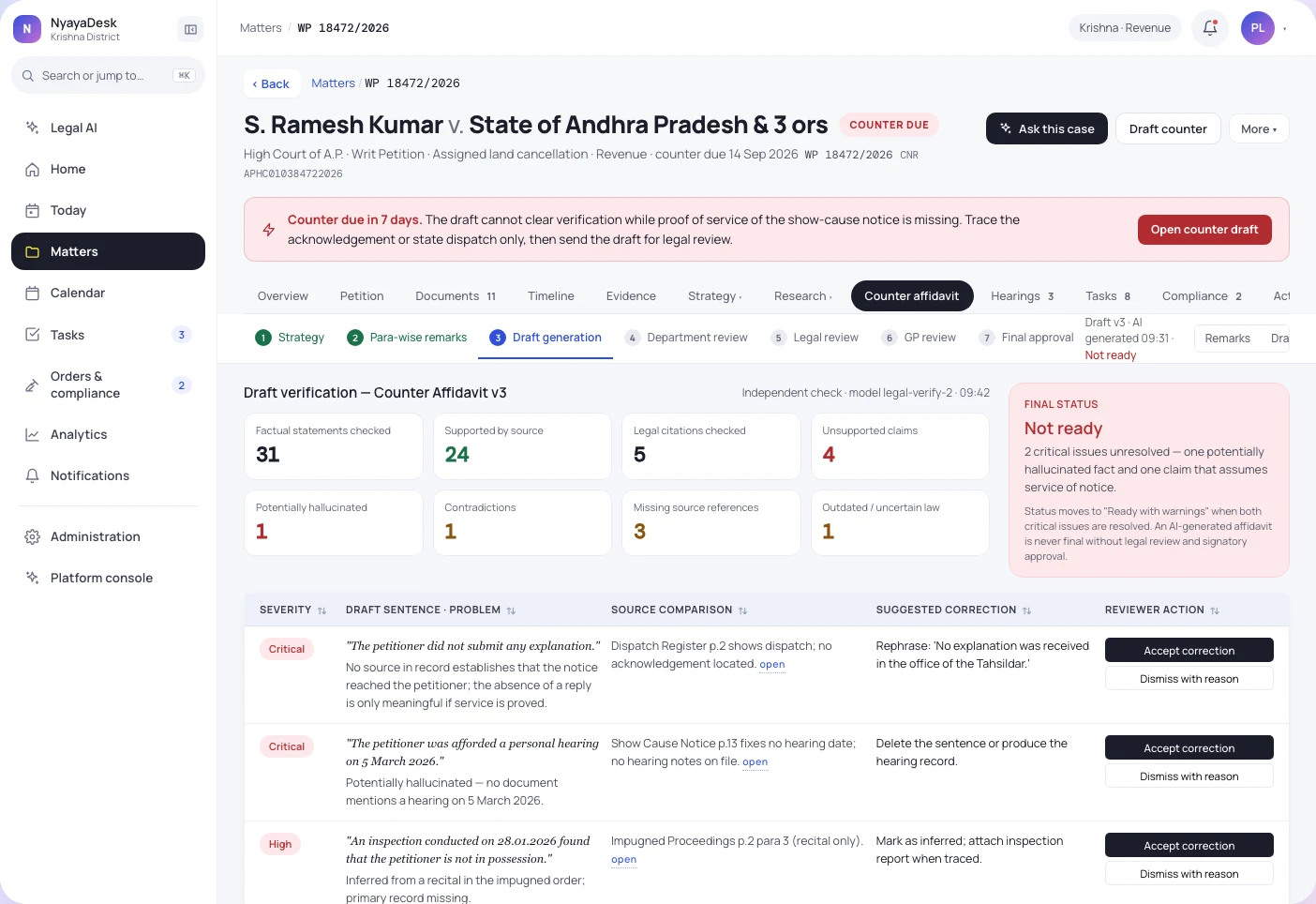
Never miss a direction
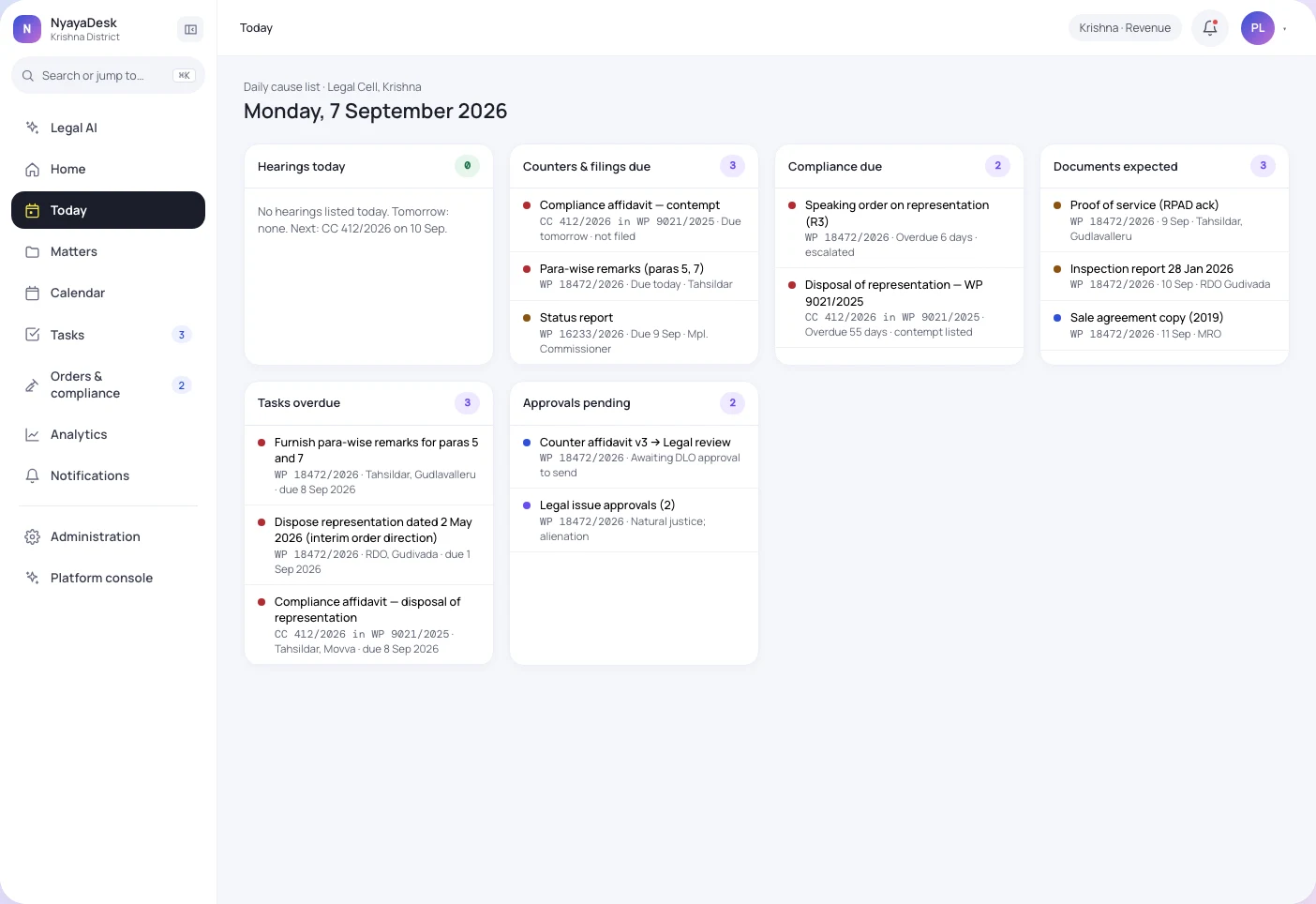
Court directions become obligations with a named officer and a due date from configured rules. Overdue items escalate before a contempt notice does, and nothing closes without evidence.
Hearings and compliance →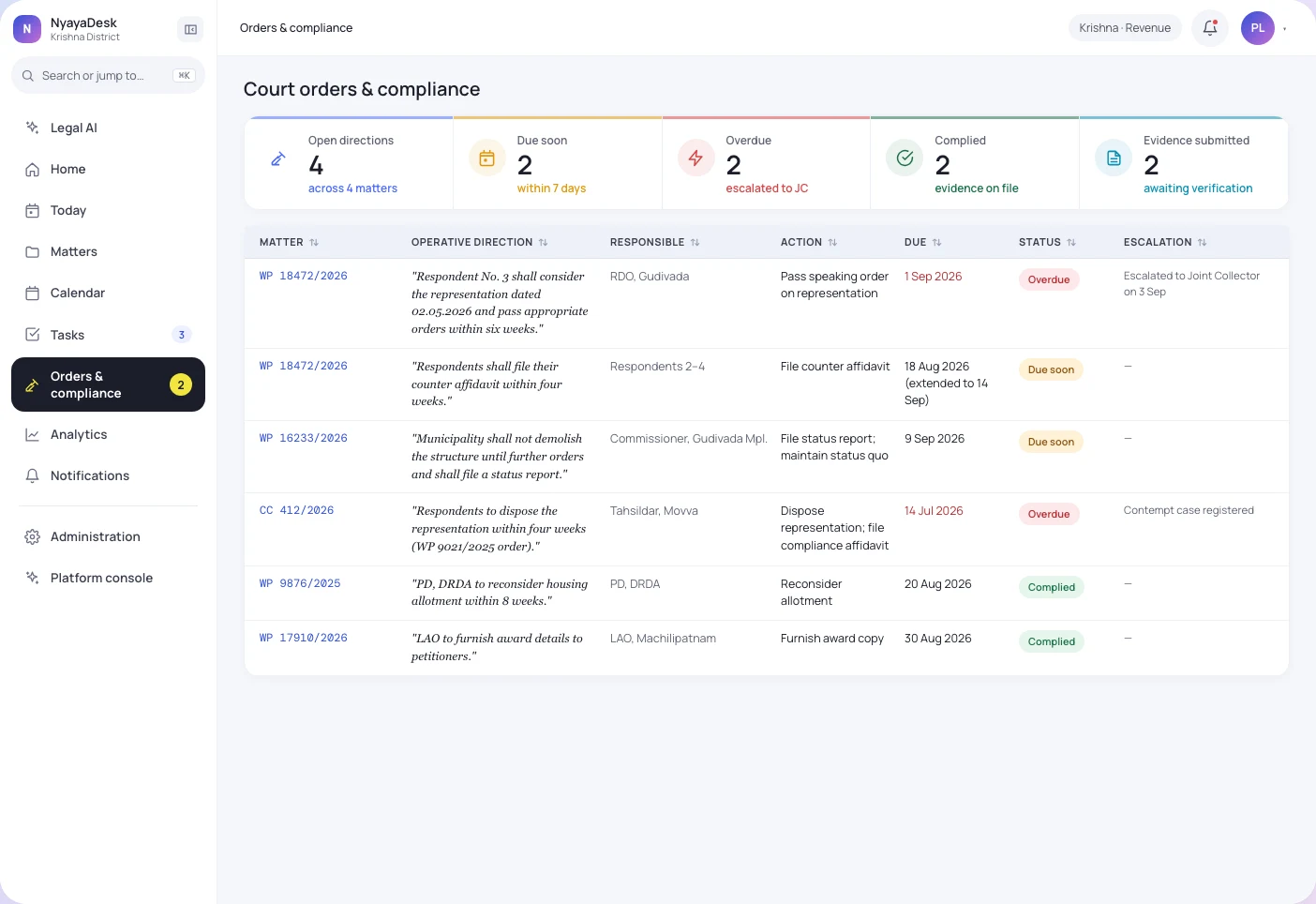
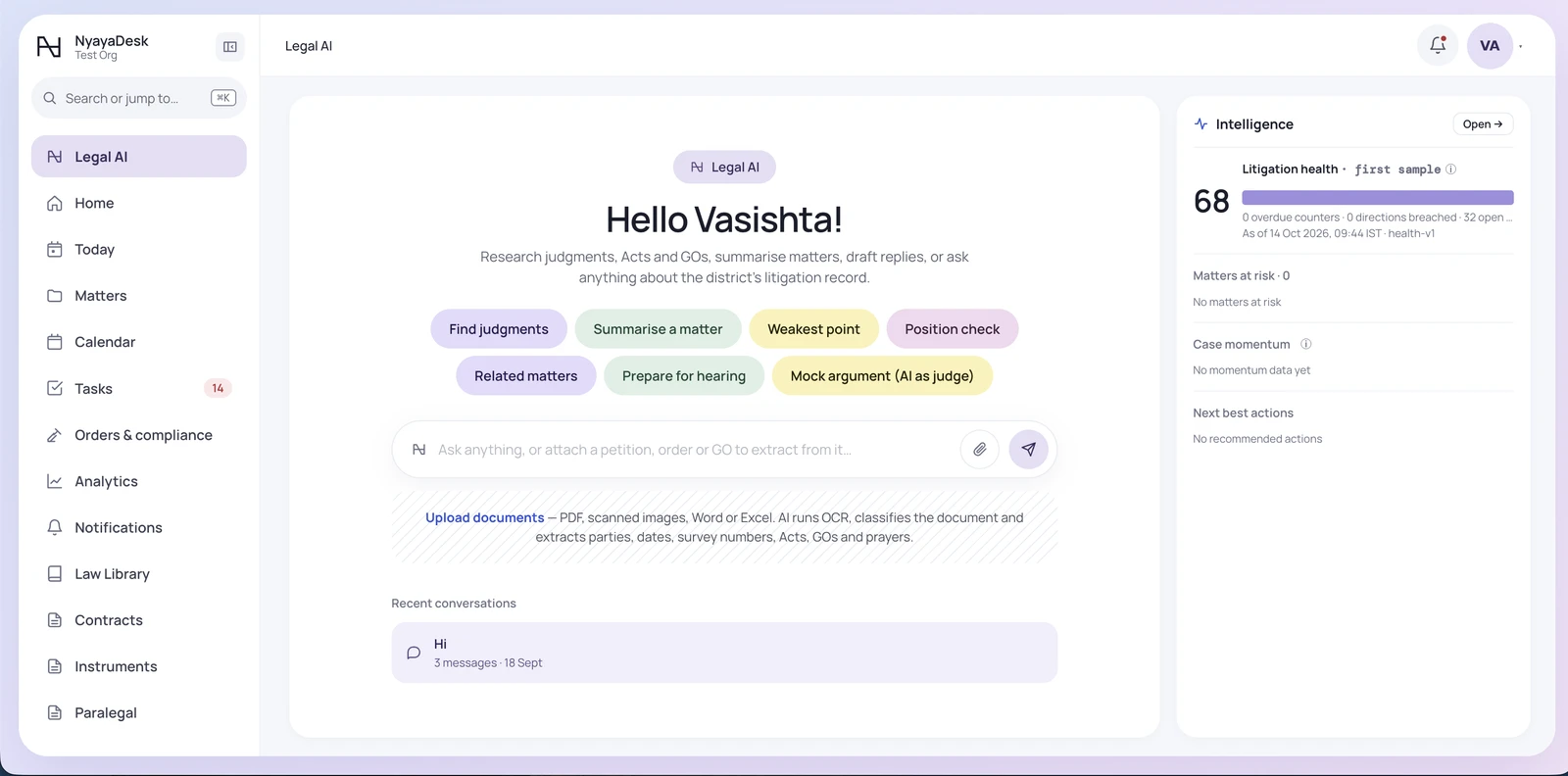
Beyond the matter
The rest of the legal desk, in the same place.
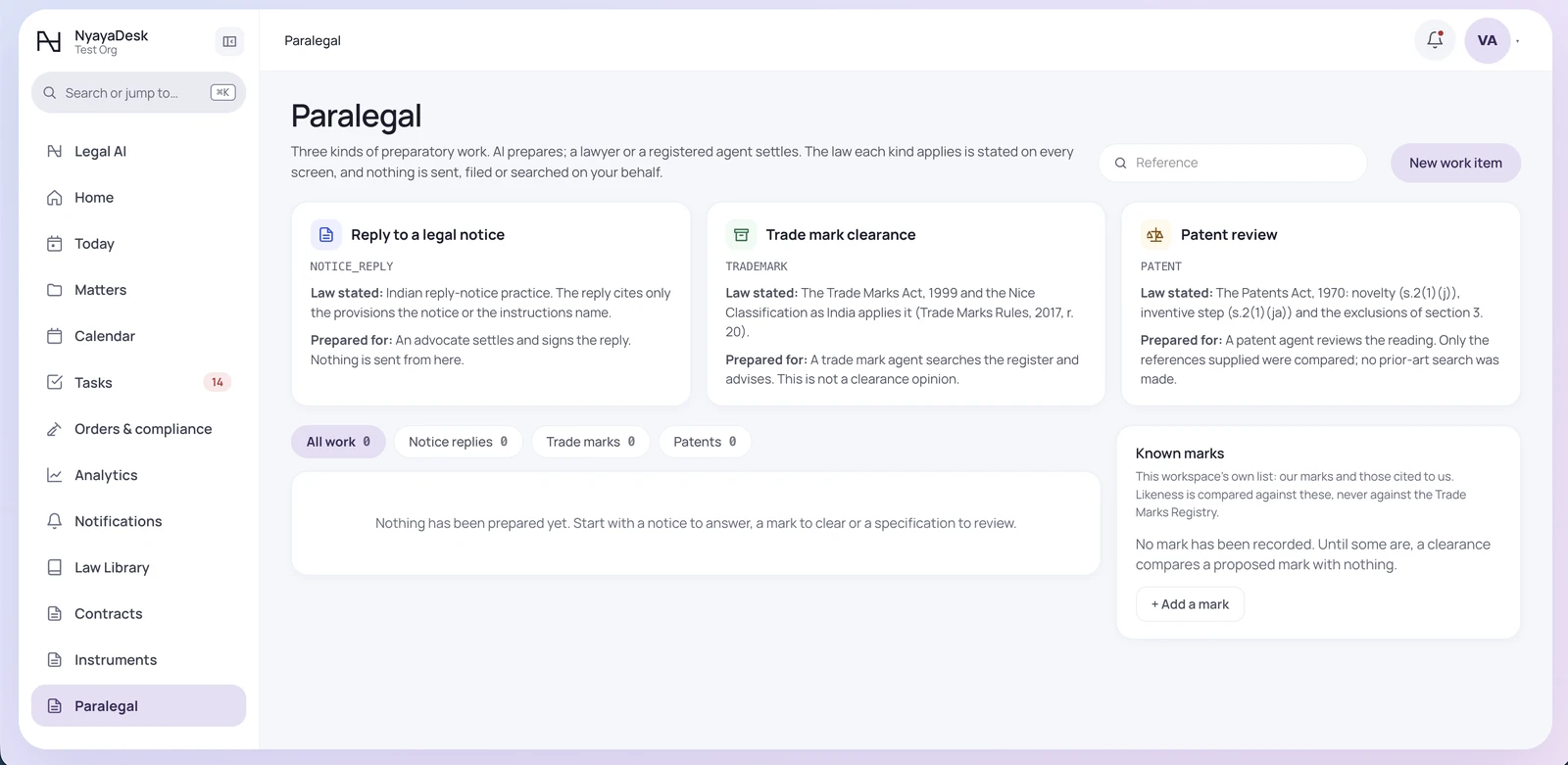
Law Library
The Constitution, central Acts and the new criminal codes on one shelf. A section is marked verified only when its words match the official source.
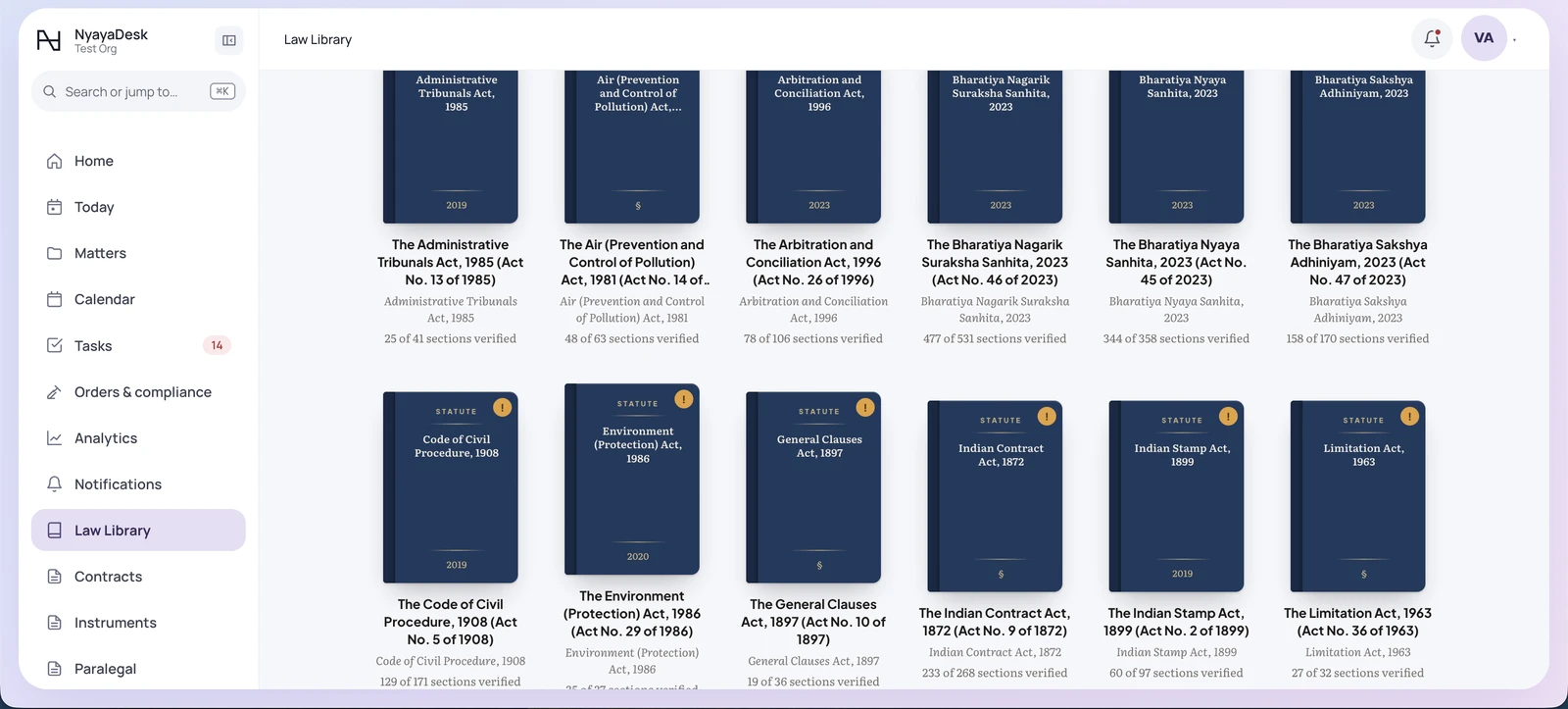
Paralegal
Replies to legal notices, trade mark clearance and patent review. The AI prepares; a lawyer or registered agent settles. Nothing is sent or filed from here.
The State is the respondent by default.
It cannot choose its caseload or decline to appear, and an unanswered petition stands unrebutted. The record that decides the case usually sits with a department, not with counsel.
cases with the Government of Andhra Pradesh as a party in the High Court and Supreme Court
new writ petitions filed against the government on an average day
contempt of court cases pending against government authorities across the state
Source: NeGD / MeitY case study on APOLCMS
Built to be inspected.
What the system does, where your data goes, and what we don’t claim, in plain language.
Trust and data →Search applies matter permissions before it fetches a single record.
Change one word of an approved draft and the approval no longer applies.
Model calls run outside India today. We name the routes and their retention terms.
Agreement between models is not legal truth. We never claim it is.
Be ready before the hearing.
See a fictional writ petition go from notice to a checked counter affidavit.